
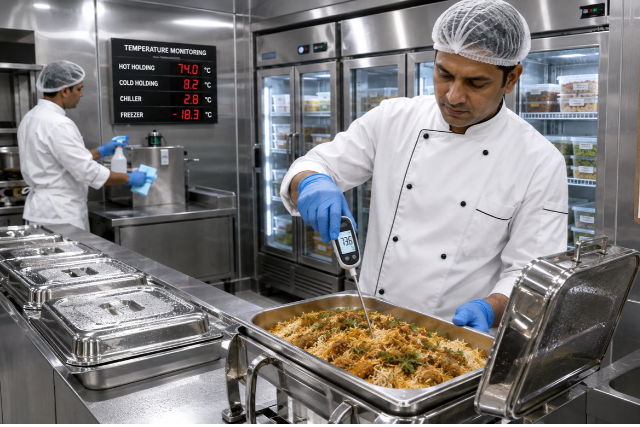
Food safety in catering services demands strict adherence to protocols that can make the difference between a successful event and a health crisis. Hot foods must stay above 135°F and cold items below 41°F. Any leftovers at room temperature for over 2 hours require disposal right away. These aren’t mere suggestions. They’re non-negotiable standards that protect your guests from foodborne illnesses.
You need to understand catering food safety guidelines whether you’re planning outdoor catering or an indoor celebration in Bangalore. This piece is about how Bhandary’s Kitchen implements detailed food safety and sanitation in catering services, from pre-event preparation through post-event protocols. You’ll find the specific standards, procedures and best practices that ensure safe catering for events of any size.
Food Safety Standards and Guidelines for Catering Services in Bangalore
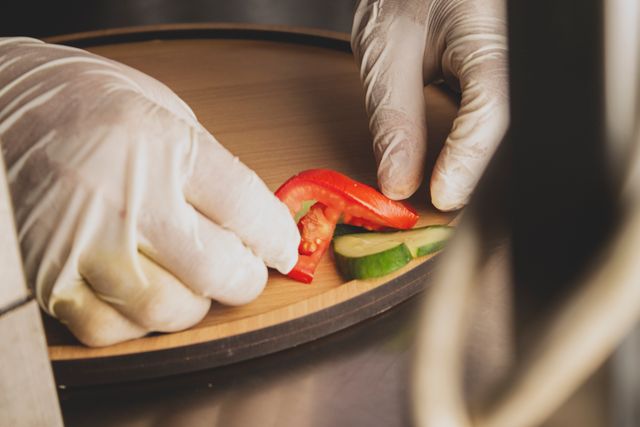
Bangalore’s catering businesses operate under strict regulations from the Food Safety and Standards Authority of India (FSSAI). The authority mandates registration or licensing for all food business operators before they start operations. Every caterer in the city must get appropriate FSSAI certification based on their annual turnover and operational scale. This applies to small home-based services and large wedding caterers serving thousands alike. Caterers who run their business without valid FSSAI approval can face penalties up to ₹5 lakh and potential business closure during live events.
The regulatory framework addresses food safety hazards that pose risks in catering operations. Microbiological hazards remain the most critical concern. Bacteria can enter food handling areas through soil, human contact, waste, contaminated water, pests and raw ingredients. Chemical hazards occur when cleaning products or pesticides contaminate food through improper storage or surface preparation. Physical hazards involve foreign objects like broken glass or hair that enter food during preparation.
FSSAI guidelines require catering establishments to maintain specific infrastructure standards. Floors, ceilings and walls must be constructed from impervious materials that prevent dirt accumulation and mould growth. All equipment and containers require regular cleaning, washing, drying and proper stacking to prevent microbial growth. Windows and doors need wire-mesh screening to block pest entry, while drainage systems must manage waste disposal to maintain hygienic conditions throughout food preparation areas.
Pre-Event Food Safety Protocols and Preparation

Supplier verification is the foundation of food safety in catering services. A full picture of ingredient sources protects consumers from contamination risks. Caterers must review suppliers through audits, inspections and quality checks to confirm that every ingredient meets safety standards before entering the kitchen. The qualification process gets into supplier capabilities, financial stability and adherence to regulatory requirements. Continuous performance monitoring tracks key indicators through regular reviews and scorecards.
Storage procedures before preparation require careful temperature control to slow bacterial growth. Refrigerators must maintain temperatures at or below 40°F (4°C), and freezers need to stay at 0°F (-18°C). Perishable foods that sit at room temperature for more than two hours require disposal right away. This window reduces to one hour when ambient temperatures exceed 90°F. Raw meat, poultry and seafood must be wrapped securely and stored in the coldest refrigerator sections. This prevents cross-contamination through dripping juices.
Cold chain logistics play the most important role in maintaining ingredient quality during transport from suppliers to catering facilities. Temperature-controlled storage, refrigerated transport vehicles and immediate monitoring systems work together to keep products within required temperature ranges throughout. Hot food prepared in advance must cool to the lowest possible temperature within 90 minutes before refrigeration. Prolonged exposure to the danger zone between 8°C and 63°C accelerates bacterial multiplication.
Equipment sanitization follows a distinct four-step process separate from simple cleaning. Surfaces require washing with detergent and hot water at 60°C, followed by sanitising treatment. You can use either very hot water at 75°C for at least two minutes or approved chemical sanitizers applied according to the manufacturer’s specifications. Staff must complete food hygiene training appropriate to their roles. Level 2 certification is required for general food handlers and covers personal hygiene, cross-contamination prevention and safe food practices.
On-Site Food Safety Management and Post-Event Protocols
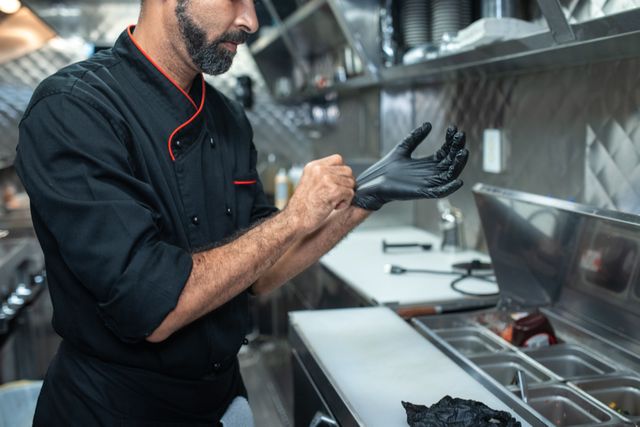
Temperature monitoring on-site becomes the central priority once food service begins at any event location in Bangalore. Staff must check temperatures with fine-tuned thermometers every two hours, especially when you have high-risk foods that need hot holding above 63°C or cold storage below 8°C. Any hot food displayed below 63°C can remain at ambient temperature for a maximum of 2 hours. After that, it needs reheating to the original cooking temperature or disposal.
Separate preparation surfaces for raw and cooked foods prevent cross-contamination, with thorough disinfection between uses. Washing raw meat and poultry can spread bacteria up to 80 cm from the sink and contaminate adjacent surfaces and utensils. Designated cutting boards, knives, and wiping cloths for different food types reduce transfer risks by a lot.
Handwashing stations at outdoor catering setups must provide continuous running water from insulated containers with spigots, among other things like liquid soap and paper towels. Hand sanitizers serve as supplements rather than replacements for proper hand washing procedures.
Post-event protocols require immediate disposal of perishable foods held outside safe temperature ranges. Documentation throughout service has temperature logs, supplier records, staff training certificates, and corrective actions taken during the event. Regular food safety audits verify compliance with hygiene standards, temperature controls, and cross-contamination prevention measures in any catering operation.
Key Takeaways
Professional catering demands rigorous food safety protocols that protect guests and maintain business reputation through every stage of service.
- Hot foods must stay above 135°F (63°C) and cold items below 41°F (8°C), with any food at room temperature beyond 2 hours requiring immediate disposal.
- FSSAI certification is mandatory for all Bangalore caterers, with non-compliance resulting in penalties up to ₹5 lakh and potential business closure.
- Supplier verification, temperature-controlled storage, and proper cold chain logistics prevent contamination before food reaches the event venue.
- On-site temperature monitoring every 2 hours, separate preparation surfaces for raw and cooked foods, and proper hand washing stations are essential for safe service.
- Post-event documentation including temperature logs, supplier records, and safety audits, ensures compliance and enables continuous improvement in food safety practices.
Whether you’re managing intimate gatherings or large-scale events, these food safety standards form the foundation of professional catering services. Implementing systematic protocols from ingredient sourcing through final cleanup protects your guests from foodborne illnesses whilst ensuring regulatory compliance in Bangalore’s catering industry.
You May Also Like: How Bhandary’s Kitchen Plan Event Timelines From Setup to Cleanup?
Conclusion
Food safety in catering services requires steadfast dedication to protocols at every stage, from supplier selection through post-event cleanup. The standards outlined here protect your guests and preserve your catering business’s reputation in Bangalore’s competitive market. Temperature controls and hygiene practices distinguish professional caterers from those who serve food. Your adherence to FSSAI guidelines and systematic safety protocols will give every event both memorable and safe experiences for all attendees.
FAQs
Q1. How can catering businesses prevent cross-contamination during food preparation?
Preventing cross-contamination requires good personal hygiene practices, particularly thorough handwashing. Use separate preparation areas, equipment, and utensils for different food types, especially when handling raw and cooked items. Designated cutting boards and knives for specific foods significantly reduce contamination risks.
Q2. What temperature controls are essential for safe catering operations?
Hot foods must be maintained above 63°C (135°F) whilst cold items should stay below 8°C (41°F). Temperature checks should be conducted every two hours using calibrated thermometers. Any perishable food left at room temperature for more than two hours requires immediate disposal to prevent bacterial growth.
Q3. Why is food safety critical in catering operations?
Food safety standards protect consumers from foodborne illnesses caused by bacteria, viruses, and parasites. Proper safety protocols prevent serious health conditions including gastroenteritis, dehydration, and kidney failure. Maintaining these standards also protects the catering business’s reputation and ensures compliance with regulatory requirements.
Q4. What are the proper food storage practices before catering events?
Refrigerators must maintain temperatures at or below 4°C (40°F), whilst freezers should stay at -18°C (0°F). Raw meat, poultry, and seafood require secure wrapping and storage in the coldest refrigerator sections. Hot food prepared in advance must cool to the lowest possible temperature within 90 minutes before refrigeration.
Q5. What documentation is required for catering food safety compliance?
Caterers must maintain comprehensive records including temperature logs throughout service, supplier verification documents, staff training certificates, and any corrective actions taken during events. Regular food safety audits verify compliance with hygiene standards, temperature controls, and cross-contamination prevention measures across all operations.