
When you pick Corporate Catering Services in Bangalore for your next company event, you juggle headcount accuracy, dietary priorities, budget constraints and vendor reliability. A single oversight can derail the whole experience for your team. Typical event catering for companies in India ranges from ₹400-₹700 per head for working lunches and ₹900-₹1,500+ for sit-down dinners, depending on menu and service style. Then event planning requires a structured catering needs list so nothing falls through the cracks. This checklist covers nine points that help you select the best corporate catering services in Bangalore and execute catering services for corporate events.
1. Start with Clear Event Goals and Catering Format

Understanding Your Event Type and Audience
Event planning for corporate functions in Bangalore starts with identifying your event type and audience profile. Training sessions and workshops benefit from flexible meal breaks where buffets allow participants to grab food without disrupting the session’s flow. Buffet setups work best for networking lunches and evening receptions because they encourage mingling and informal conversations by giving attendees freedom to move around while selecting their food. Product launches work well with buffets that offer guests easy access to food while they explore your products or listen to presentations.
Formal events like executive dinners or VIP client meetings require the sophistication of plated meals instead of buffets. The headcount plays a role in format selection as well. Large groups might require buffet-style setups. Smaller groups enjoy plated meals or boxed lunches. Understanding these differences helps you build an accurate catering needs list before approaching vendors.
Choosing Between Buffet, Plated, or Box Meals
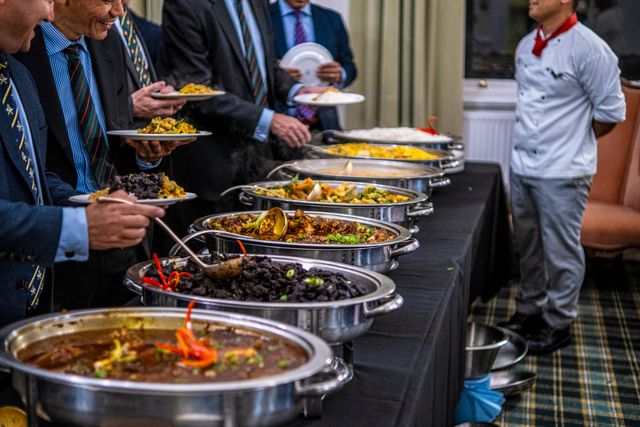
Buffet catering offers versatility for a wide range of corporate events. Its main appeal lies in the flexibility it offers attendees and its ability to cater to a variety of dietary priorities. Multiple options like vegetarian, gluten-free, and protein-rich dishes let attendees customize their plates based on personal priorities or restrictions. Buffets often reduce per-person costs compared to plated dinners by allowing you to control portion sizes and reduce staffing needs. They create opportunities for organic connections as people move through food stations.
Plated service, sometimes called American service, delivers a plate that has been prepared and arranged in the kitchen to each visitor. Formal events may require plated meals. Casual meetings may use buffet-style catering. Plated meals work better with the tone for formal activities. Buffets encourage a comfortable environment for informal or interactive gatherings. The choice affects your budget since formal catering requires more catering staff and resources, which can increase costs.
Setting the Right Formality Level
Formality level shapes every aspect of event planning, from menu planning and service style to staffing requirements. Formal events require a staff-to-guest ratio of 1:8 to 1:12, depending on service style and complexity, with each server trained in proper etiquette and formal presentation techniques. Informal events can operate with ratios of 1:15 to 1:25 and focus on efficiency and guest satisfaction rather than service rituals.
Choosing the right catering service style will give your guests a memorable experience at catering services for corporate events. Professional caterers who specialize in corporate events understand the business environment and offer specific menus to match the personality and style of the event. For the best corporate catering services in Bangalore, match your formality expectations with the vendor’s service capabilities before finalizing contracts.
2. Get Your Guest Count and Dietary Data Right
Why Accurate Numbers Prevent Catering Disasters?
Guest count accuracy is the foundation of successful event planning and directly influences every decision from budget allocation to food preparation. You invite 300 people to a corporate event and can expect no less than 240 to attend, since 20-30% of invitees will typically respond no. This estimation matters because you pay per person. Accuracy helps you stay within budget and ensure each guest receives proper care.
Your guaranteed minimum guest count drives multiple operational decisions. It determines seating arrangements and influences room setup and layout. The number dictates how many servers and bartenders you need to make the event successful. Most importantly, it helps culinary staff plan the quantity needed for both food and beverage to provide enough for your guests. Professional caterers prepare based on your guaranteed minimum and include a 3% buffer to handle dropped meals or unexpected attendees who didn’t RSVP.
Inaccurate counts create financial waste through overordering or leave guests disappointed through underestimation. Miscalculations can translate to thousands of rupees in extra costs for large events that could improve other aspects of the experience. Caterers require your final guest count five working days before the event date. This allows sufficient time for procurement and preparation. Your numbers can increase after this deadline, but they cannot go down. This makes it wiser to underestimate rather than inflate projections.
Collecting Veg, Non-Veg, Jain, and Vegan Preferences
Building dietary questions into the registration or RSVP process from the beginning represents the quickest way for Corporate Catering Services in Bangalore. Early collection allows menus, service plans, and ingredient sourcing to be adjusted without creating unnecessary pressure for organizers and caterers. The additional workload is absorbed within normal planning processes rather than becoming a last-minute crisis when dietary information is gathered early.
Your RSVP form should include a section where attendees can indicate specific dietary needs. This means capturing vegetarian, non-vegetarian, Jain, and vegan preferences for Bangalore teams. Jain meals require special attention since they avoid onion, garlic, and root vegetables. These meals include dal, plain vegetables, roti, and rice, prepared separately to maintain purity and adhere to religious guidelines. Gathering this data ahead of time gives you and your caterer enough time to plan and prepare suitable options.
Accurate dietary information simplifies planning and improves guest confidence. It reduces the likelihood of last-minute complications. Professional caterers use structured allergen-management processes that include ingredient tracking, food labeling, staff briefings, and guest communication. Knowing dietary restrictions in advance ensures appropriate meal options are available and makes attendees feel valued and welcomed.
Using Digital Tools for RSVP Management
Digital RSVP platforms replace manual spreadsheets with live databases where every confirmation, decline, and dietary preference syncs instantly. Data errors from duplicate entries or missed dietary requirements erode trust and professionalism. Automation eliminates these problems. Modern systems send timed reminders by email and WhatsApp. This reduces no-shows through personalized nudges 48 hours before the event.
RSVP management tools allow you to track everything live without manual updates. Platforms provide customizable forms that capture attendee details, separate participants by category, and manage check-ins from one dashboard. This eliminates overbooking, wrong counts, and entry delays during the event. The faster and more accurate your responses will be when you make the RSVP process easier.
3. Design a Balanced Corporate Menu for Bangalore Teams
Menu planning for catering services for corporate events goes beyond selecting dishes that taste good. A balanced menu creates focus without fatigue and maintains inclusivity without complexity. It works across different service formats without losing its effect. Your menu should offer a mix of proteins, vegetables, and complex carbs for the best corporate catering services in Bangalore. Thoughtful options for common dietary needs matter. This balance ensures guests leave satisfied rather than sluggish, whether you serve 30 people or 300.
Mixing Regional Cuisines for Diverse Priorities
Bangalore teams represent diverse cultural backgrounds. Mixing regional cuisines becomes necessary rather than optional. A well-laid-out corporate menu should have at least two appetizers, two entrees, and two dessert options to appeal to different taste priorities. Offering variety ensures better guest satisfaction across multi-cuisine menus that have Indian, continental, Asian, vegan, and health-focused options.
Corporate events require a structured approach. You balance familiar favorites with options that cater to specific cultural or religious food practices. A satisfying meal has a base like rice, noodles, or pasta. One or two protein options come next. Vegetables add balance, and a side or appetizer rounds things out with something sweet to end. This structure works whether you choose buffet stations or plated service. The goal remains offering variety without adding chaos to your service flow.
South Indian, North Indian, and Continental Options
South Indian cuisine for corporate events brings regional diversity from Karnataka, Andhra Pradesh, Tamil Nadu, Telangana, and Kerala. Each state offers distinct flavors. The aromatic Bisi Bele Bath and Mysore Masala Dosa of Karnataka contrast with the fiery curries of Andhra Pradesh. Popular South Indian options have idli sambar, medu vada, dosa varieties, rasam, and coconut rice. These dishes rely on rice as the primary cereal. Tamarind provides acidity, and fresh curry leaves get generous use.
North Indian options balance the menu with wheat-based items like roti and paratha. Dal makhani, fragrant biryanis, and tandoori preparations complete the selection. The cuisine uses garam masala and features creamy curries that differ from the sambar-based preparations of the South. Continental selections round out the menu with options like grilled chicken breast with mushroom sauce, roasted potatoes, and seasonal vegetables. Think about grilled filet mignon with red wine sauce or grilled salmon with lemon dill sauce for upscale events.
Portion Sizing Based on Event Duration
Event duration affects how much food your attendees consume directly. Standard portions work for shorter events lasting one to two hours. Mid-length events running three to four hours require increased quantities. Long sessions or full-day events need multiple rounds of food rather than larger single servings.
Plan for half to one pound of food per person in buffet settings. Prepare four to six ounces of cooked meat per person for plated meals when serving meat at catering services for corporate events. Increase this amount to six to eight ounces for buffets since guests self-serve and may take larger portions. Provide one serving of carbs per person as a general guide. One to one and a half servings of protein per person work well, and one serving of vegetables per person completes the plate. Morning events call for lighter portions. Lunch events require balanced and moderate servings, while dinner events tend toward heartier offerings.
4. Choose Experienced Corporate Catering Services in Bangalore
Vendor selection separates successful corporate events from disappointing experiences, whatever your planning for guest counts or menu design. Professional Corporate Catering Services in Bangalore must demonstrate reliability through proper licensing and insurance coverage. Any catering service you work with should be licensed and insured, which protects your employees from potential foodborne illnesses. Beyond legal compliance, vendors need responsive customer service teams who solve problems when something goes wrong. To cite an instance, caterers who maintain 98% year-over-year retention rates and achieve 4.8 out of 5.0 ratings after serving over 100,000 meals demonstrate the reliability that corporate clients require.
What Makes a Vendor Suitable for Office Events?
Customization capabilities distinguish adequate vendors from exceptional ones. The best corporate catering services in Bangalore curate balanced, diverse and customized meals for workplaces across sectors rather than offering one-size-fits-all solutions. This customization extends to dietary accommodations, where vendors should provide high-protein, low-carb, vegetarian, vegan and specialized options with clear calorie and nutrient breakdowns. Vendors suitable for office events understand that corporate dining reflects company culture and values, so they align with your commitment to sustainability and wellness. Professional caterers demonstrate responsiveness and maintain helpful customer service teams, which becomes vital when coordinating catering needs and list requirements for recurring office meals or large-scale events.
Comparing Quotes and Service Inclusions
Request itemized quotes where every fee appears separately to avoid surprise charges. Delivery costs, staffing requirements, equipment rentals and dietary accommodations can carry hidden fees if not clarified upfront. Delivery pricing moves based on timing, distance and what needs transport, so confirm whether your package has simple delivery and equipment or if items like chafing dishes and display stands cost extra. Chefs, bartenders and servers rarely come free, with some vendors rolling these costs into totals while others bill hourly. Accommodating dietary needs through custom dishes can carry additional charges, as can upgraded equipment like specialty trays or decorative displays. Then, comparing quotes from multiple vendors helps you spot unnecessary add-ons and understand pricing structures that vary across Bangalore’s catering market.
Checking Reviews and Past Corporate Experience
Customer feedback offers valuable insights into punctuality, food quality and flexibility. Look for reviews mentioning these specific aspects rather than generic praise. Kitchen evaluation processes matter, especially when catering platforms visit vendor kitchens to understand their profiles, equipment quality and service capabilities before listing them. Verified reviews from actual corporate clients carry more weight than promotional testimonials. Retention statistics reveal vendor consistency, where high year-over-year retention indicates satisfied long-term corporate partnerships. Bhandary’s Kitchen represents one option worth evaluating among other established vendors serving the corporate sector for Bangalore teams.
5. Ensure Food Safety and Regulatory Compliance

Food safety compliance protects your employees and your organization’s reputation when you select catering services for corporate events. Every catering business in India must hold a valid FSSAI registration or license under the FSS Act, 2006. You risk fines up to ₹5 lakh and possible closure during live events if you operate without proper licensing. This creates devastating reputational consequences. Verify that vendors meet these mandatory standards before you sign contracts when you evaluate the best corporate catering services in Bangalore.
Mandatory Licenses and Certifications to Verify
FSSAI offers three license categories based on business scale and turnover. Basic FSSAI Registration suits small-scale catering businesses with annual turnover up to ₹12 lakhs. State FSSAI License applies to mid-sized operations with turnover exceeding ₹12 lakhs but operating within a single state. Large-scale catering companies with turnover exceeding ₹20 crores require a Central FSSAI License. Corporate canteens and institutional catering need a State License at minimum, as most institutional clients ask for this level of certification.
You should verify that vendors maintain FOSTAC-certified supervisors and pest control service contracts from certified companies. Also check for recent water test reports from NABL-accredited labs and third-party food safety audit certificates like ISO 22000 or FSSC 22000. These additional certifications show steadfast dedication to food safety management systems. The FSSAI license displays a 14-digit number that provides manufacturer registration details and should appear on all food packaging and vendor documentation.
Food Handler Health Standards
Personal cleanliness of food handlers represents the most critical link to prevent foodborne illness. All food handlers must wear suitable clean protective clothing that includes head covering, face mask, gloves and footwear. These provide adequate coverage and prevent hair, perspiration and other contaminants from reaching food. Workwear should remain clean and in good condition, free from tears or fraying material.
Hand washing procedures require soap and clean potable water for 20 seconds before food contact. Handlers must wash hands after toilet use, after handling raw meat and after touching waste. Food handlers must wash hands at the beginning of food handling activities. They must also wash hands after handling contaminated materials, tools or equipment. Handlers must avoid certain habits that include scratching their nose, running fingers through hair and rubbing eyes or mouth. They must maintain trimmed nails and hair. No food handler shall participate in smoking, spitting, chewing, sneezing or coughing over food in preparation areas.
Annual medical fitness certificates for all food handlers ensure ongoing health compliance. Training requirements mandate that all handlers receive instruction in food hygiene and safety aspects that match their work activities.
Waste Management and Disposal Planning
Waste segregation into wet and dry garbage prevents cross-contamination in food preparation areas. Disposal should occur through segregated color-coded bins labeled as ‘WET’, ‘DRY’ and ‘OTHER MATERIALS’. Wet garbage requires removal from every food zone after each session to avoid contamination threats. Foot-operated bins work best for pre-preparation and production areas. Waste storage containers must remain covered and emptied at regular intervals per local regulations. You must wash them with disinfectant before reuse. Disposal areas must stay located away from food processing zones to prevent contamination.
6. Plan Setup, Delivery, and On-Site Coordination
Setting Realistic Delivery Windows
Logistics execution determines whether your event planning efforts translate into smooth experiences or stressful scrambles. Confirm your final guest count with the caterer 2-4 weeks before your event, even if numbers haven’t changed. This window allows vendors to finalize procurement and staffing. Brief all vendors on your timeline one week before and reconfirm delivery timing, setup logistics, and venue access. Coordinate with your venue about kitchen access, loading areas, power supplies, and parking for catering trucks. Conduct a final walkthrough the day before to check logistics and confirm gate access. Besides these checkpoints, inspect venues for loading dock access, power source locations and capacity, kitchen specifications, storage availability, and waste disposal arrangements.
Confirming Equipment and Serving Staff Availability
Equipment requirements change based on your chosen service format. Buffet setups need chafing dishes and serving platters to keep food warm until every employee finishes their meal. Professional Corporate Catering Services in Bangalore provide experienced servers who manage serving setups, especially when you have companies with structured meal programs. Some vendors assign exclusive corporate chefs who customize everything according to specific requirements for larger organizations exceeding 150 personnel. Schedule services at least 2-3 weeks in advance to ensure availability while you give vendors enough time to plan your menu and arrange appropriate equipment. Professional serving staff should be confirmed during this booking window.
Designating an On-Site Point of Contact
Assign a specific on-site coordinator for day-of management who handles adjustments smoothly. This person monitors food temperatures, coordinates with venue staff and other vendors, and ensures activities flow in sync. Experienced on-site managers identify potential timing bottlenecks before they happen and adjust service logistics and staffing. Clear communication channels between your coordinator and the catering team enable swift adjustments to meal timing or quantities without affecting guest experience. Therefore, this single point of contact prevents the confusion that occurs when multiple team members give conflicting instructions to catering staff.
7. Lock in Budget and Contractual Terms Early
Financial clarity before signing contracts prevents disputes during execution and protects your organization from unexpected costs when booking catering services for corporate events. Budget discussions should happen within your organization before approaching any vendor. Establish your spending ceiling rather than letting vendor quotes determine your budget. This internal-first approach gives you negotiating power and ensures the best corporate catering services in Bangalore align with your actual spending capacity.
Understanding Per-Head Costs in the Bangalore Market
Corporate catering charges in Bangalore range from ₹280 to ₹550 per plate for standard events serving 50 guests. Simple vegetarian menus start from ₹150-280 per plate. Premium wedding packages can cost ₹500 to ₹3,000 per plate, depending on the cuisine’s complexity and service format. Menu selection, guest count, cuisine type, and service style influence final pricing. You should request customized quotes rather than relying on generic estimates. Travel distance, accessibility, and location within Bangalore affect logistics and transportation costs. Vendors like Bhandarys Kitchen and other providers adjust pricing based on these location factors.
Cancellation Policies and Payment Terms
Payment terms require a 25-50% deposit upon signing. Remaining payments are tied to specific milestones or completion dates. This structure protects your organization from paying for undelivered services and provides vendors the working capital they need. Cancellation policies should include tiered refund schedules. Cancellations 60 or more days before an event incur minimal penalties. Cancellations within two weeks could result in full payment. Cancellations made more than 60 days before the event receive full deposit refunds. Those made 30-60 days before receive 50% refunds, and less than 30 days receive no refund.
Adding Buffers for Last-Minute Changes
A contingency reserve of 10-12% of total event budget represents the recommended minimum for corporate event budgeting in India. This reserve handles unplanned costs including last-minute vendor replacements, unexpected headcount increases, and equipment failures. Negotiate clauses that allow payment adjustments based on final guest counts, additional services requested, or scope reductions. So this flexibility protects your budget and ensures vendors receive fair compensation for delivered services.
8. Manage Event Planning Execution with Run-of-Show
Creating a Detailed Timeline for Service Day
A run-of-show document maps your event minute by minute from setup through final vendor departure. This detailed playbook answers who does what, where they should be, and when each task needs to be completed. Your timeline should specify equipment arrival times, food setup windows, service start times and breakdown schedules for catering services for corporate events. Break down the day into time blocks by hour or even five-minute intervals for complex productions. Each task needs an owner with contact details and check-in confirmations.
Monitoring Food Temperatures and Quality
Temperature control prevents foodborne illness during Corporate Catering Services in Bangalore events. Hot food must maintain temperatures above 63°C throughout service, while cold items stay below 8°C. Use adjusted thermometers to verify core temperatures reach 75°C during cooking. Food held below 63°C must be consumed within two hours of cooking. Reheating requires core temperatures reaching 70°C minimum, and food can only be reheated once. Therefore, monitor these temperatures throughout your event to protect guest health and regulatory compliance.
Handling Last-Minute Adjustments Smoothly
Last-minute changes happen no matter your planning efforts. Professional caterers move service pacing when speeches run long or guest arrival delays occur. Temperature-controlled equipment holds dishes at optimal conditions until service timing moves. Communication between your on-site coordinator and catering team makes swift timing or quantity adjustments possible without disrupting the guest experience.
9. Review Performance and Optimize for Next Time
Gathering Attendee Feedback on Food Quality
Post-event feedback collection turns future event planning into informed decision making. Survey data reveals that 45% of all event feedback focuses on food and beverage. This places it way ahead of event content at 27% and venue location at 18%. This attention to food quality makes feedback collection essential for Corporate Catering Services in Bangalore. Send satisfaction surveys after events and ask attendees to rate food quality, variety, presentation, and whether dietary needs were accommodated. Include questions about service timeliness and staff professionalism to capture the complete dining experience. Digital feedback forms completed on mobile devices capture fresh impressions before details fade.
Rating Vendor Punctuality and Professionalism
Vendor ratings review suppliers based on quality and delivery timeliness. Rate your caterer’s adherence to delivery schedules, setup completion on time, and problem resolution capabilities. These ratings provide performance tracking over time and inform contract renewals for catering services for corporate events.
Updating Your Best Corporate Catering Services in Bangalore List
Build a centralized vendor performance database that compares feedback across multiple events. Document which vendors like Bhandarys Kitchen meet standards and which require improvement plans. This approach replaces opinions with comparable data that guides smarter sourcing decisions for the best corporate catering services in Bangalore.
Comparison Table
|
Checklist Point |
Main Focus | Considerations to Keep in Mind | Timing | Budget Impact |
Critical Success Factors |
| Start with Clear Event Goals and Catering Format | Identifying event type, audience profile, and appropriate service style | Buffets work well for training sessions; formal events require plated meals; headcount influences format selection; staff-to-guest ratio of 1:8 to 1:12 for formal events vs 1:15 to 1:25 for informal | Original planning phase before approaching vendors | Buffets reduce per-person costs compared to plated dinners; formal catering requires more staff and resources, which increases costs | Matching formality expectations with vendor capabilities; event type determines service format |
| Get Your Guest Count and Dietary Data Right | Accurate headcount and complete dietary preference collection | Expect 20-30% no-shows; caterers prepare based on guaranteed minimum with 3% buffer; collect veg, non-veg, Jain, and vegan preferences early | Final count required 5 working days before event; dietary data collected during RSVP process | Inaccurate counts create financial waste through overordering or guest disappointment; miscalculations translate to thousands of rupees in extra costs | Digital RSVP platforms with real-time tracking; structured allergen-management processes; dietary data collection done early |
| Design a Balanced Corporate Menu for Bangalore Teams | Creating inclusive menus with regional variety and proper portions | Include at least 2 appetizers, 2 entrees, and 2 desserts; mix South Indian, North Indian, and Continental options; balance proteins, vegetables, and complex carbs | Menu planning phase after dietary data collection | ₹400-₹700 per head for working lunches; ₹900-₹1,500+ for sit-down dinners | Half to one pound of food per person for buffets; 4-6 ounces cooked meat for plated meals; 6-8 ounces for buffet meat servings |
| Choose Experienced Corporate Catering Services in Bangalore | Vendor selection based on reliability, licensing, and corporate experience | Must be licensed and insured; verify customization capabilities; check 98% retention rates and 4.8/5.0 ratings; review past corporate experience | 2-3 weeks before event for booking | ₹280-₹550 per plate for standard events (50 guests); simple vegetarian ₹150-280 per plate; premium packages ₹500-₹3,000+ per plate | Request itemized quotes; verify FSSAI licensing; check customer feedback on punctuality and food quality |
| Ensure Food Safety and Regulatory Compliance | Meeting mandatory food safety standards and health regulations | Valid FSSAI registration required; verify FOSTAC-certified supervisors; annual medical certificates for handlers; proper waste segregation | Verification during vendor selection phase | Fines up to ₹5 lakh for operating without proper licensing | FSSAI license categories based on turnover; food handlers must wash hands for 20 seconds; waste disposal through color-coded bins |
| Plan Setup, Delivery, and On-Site Coordination | Logistics execution for smooth event flow | Confirm guest count 2-4 weeks before; brief vendors one week before; conduct final walkthrough day before; verify loading dock access and power sources | Timeline: 2-4 weeks, 1 week, and 1 day before event | Travel distance and accessibility affect logistics and transportation costs | Assign on-site coordinator; confirm equipment and serving staff availability; set realistic delivery windows |
| Lock in Budget and Contractual Terms Early | Financial clarity and contract protection | Establish internal spending ceiling before vendor quotes; 25-50% deposit upon signing; tiered cancelation refund schedules | Before signing contracts; internal budget discussions first | 10-12% contingency reserve recommended for corporate events; cancelations 60+ days minimal penalty, within 2 weeks full payment | Negotiate payment adjustments for final guest counts; understand per-head costs in Bangalore market; clear cancelation policies |
| Manage Event Planning Execution with Run-of-Show | Minute-by-minute event coordination and quality control | Create detailed timeline from setup through departure; hot food above 63°C, cold items below 8°C; food held below 63°C consumed within 2 hours | Event day execution; temperature monitoring throughout service | Not mentioned | Run-of-show document specifying who does what and when; adjusted thermometers for temperature verification; clear communication for last-minute adjustments |
| Review Performance and Optimize for Next Time | Post-event evaluation and continuous improvement | 45% of event feedback focuses on food and beverage; rate vendor punctuality, professionalism, and problem resolution; send surveys right after events | Post-event phase; survey distribution done right away | Not mentioned | Build centralized vendor performance database; document consistent performers; compare feedback across multiple events for informed decisions |
Key Takeaways
Successful corporate catering in Bangalore requires systematic planning across nine critical areas, from defining event goals to post-event performance reviews. Here’s what HR managers need to know:
- Accurate headcount prevents costly mistakes: Expect 20-30% no-shows when planning, and finalize guest counts 5 days before your event. Caterers prepare based on guaranteed minimums with a 3% buffer, making accuracy essential to avoid thousands of rupees in waste.
- Dietary data collection starts early: Build dietary questions into RSVP forms from the beginning to capture vegetarian, non-vegetarian, Jain, and vegan preferences. Early collection allows efficient menu adjustments without last-minute pressure on organizers and caterers.
- Budget strategically with 10-12% contingency: Corporate catering in Bangalore ranges from ₹400-₹700 per head for working lunches to ₹900-₹1,500+ for dinners. Always maintain a contingency reserve to handle unexpected headcount increases or equipment failures.
- Verify FSSAI licensing and food safety compliance: Every catering vendor must hold valid FSSAI registration under the FSS Act, 2006. Operating without proper licensing risks fines up to ₹5 lakh and potential event closure, making verification non-negotiable.
- Food quality drives 45% of event feedback: Post-event surveys reveal that attendees focus more on food and beverage than event content or venue location. Systematic feedback collection transforms future planning from guesswork into data-driven decision making.
The most successful corporate events combine thorough upfront planning with flexible execution and continuous improvement based on attendee feedback. By following this structured checklist, you’ll build reliable vendor relationships and consistently deliver memorable dining experiences for your Bangalore teams.
Conclusion
The nine checklist points may seem overwhelming at first, but you can break them down into manageable steps. This makes corporate event catering straightforward. Define your event goals and collect accurate guest counts with dietary priorities. Design balanced menus that reflect Bangalore’s varied palate and verify vendor credentials along with food safety compliance. You can fine-tune logistics after your foundation is solid. Lock in contractual terms and execute with a detailed run-of-show. Gather feedback after every event. This helps you improve your catering needs list and build stronger relationships with reliable vendors for future success.
FAQs
Q1. What is the typical cost range for corporate catering services in Bangalore?
Corporate catering costs in Bangalore typically range from ₹280 to ₹550 per plate for standard events serving around 50 guests. Basic vegetarian menus start from ₹150-280 per plate, while working lunches generally cost ₹400-₹700 per head. For more formal sit-down dinners or premium packages, expect to pay ₹900-₹1,500+ per person, depending on menu complexity, cuisine type, and service style.
Q2. How far in advance should I confirm my guest count with the caterer?
You should confirm your final guest count with the caterer 2-4 weeks before your event, even if numbers haven’t changed. The caterer will require your guaranteed minimum guest count at least 5 working days before the event date. This timeline allows vendors to finalize procurement, staffing, and preparation while giving you flexibility to increase numbers if needed.
Q3. What food safety certifications should I verify when choosing a corporate caterer?
Every catering business in India must hold a valid FSSAI registration or license under the FSS Act, 2006. Additionally, verify that vendors maintain FOSTAC-certified supervisors, pest control service contracts from certified companies, recent water test reports from NABL-accredited labs, and third-party food safety audit certificates like ISO 22000 or FSSC 22000. These certifications demonstrate serious commitment to food safety standards.
Q4. How should I collect dietary preferences from employees for corporate events?
Build dietary questions into your registration or RSVP process from the beginning using digital tools that track responses in real-time. Include a section where attendees can indicate specific dietary needs such as vegetarian, non-vegetarian, Jain, and vegan preferences. Early collection allows caterers to plan and prepare suitable options without last-minute complications, and helps ensure all guests feel valued and accommodated.
Q5. What should be included in a corporate catering contract?
Your catering contract should include itemized quotes with all fees listed separately, including delivery costs, staffing requirements, equipment rentals, and dietary accommodations. Payment terms typically require a 25-50% deposit upon signing with remaining payments tied to specific milestones. The contract should also specify tiered cancellation policies with clear refund schedules, and include clauses allowing payment adjustments based on final guest counts or scope changes.